Our Services
Comprehensive eye care services using advanced technology and personalized treatment approaches.
Advanced Eye Care Technology
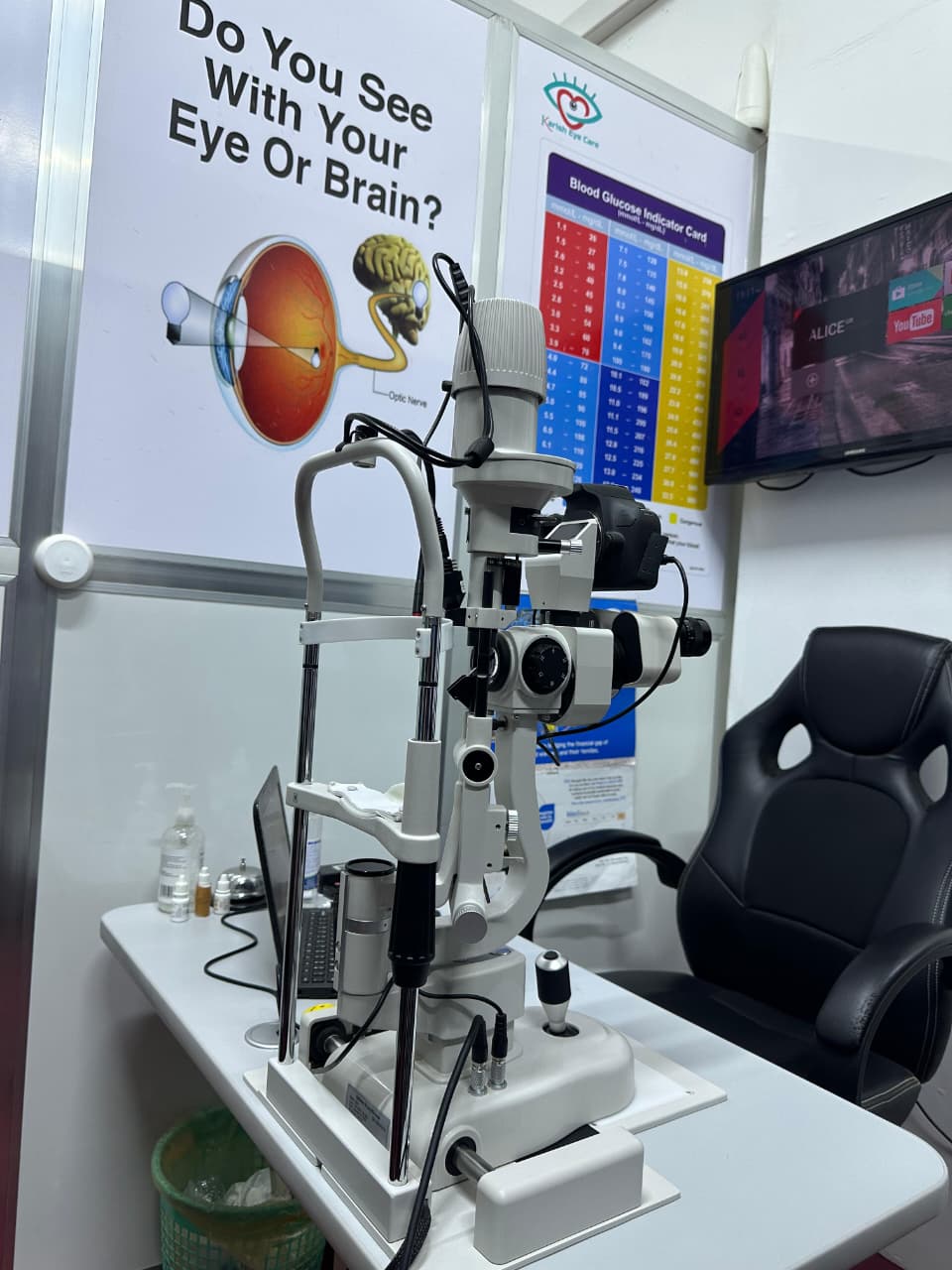
At Karish Eye Care, we invest in the latest diagnostic and treatment technologies to provide you with the most accurate assessments and effective treatments available.
Our state-of-the-art equipment allows us to detect eye conditions early, monitor disease progression precisely, and deliver treatments with greater accuracy and comfort.
Comprehensive Eye Examinations
Our thorough eye exams assess your overall eye health, vision quality, and detect early signs of eye diseases.
- Visual acuity testing
- Refraction assessment for glasses prescription
- Eye pressure measurement (tonometry)
- Retinal examination
- Glaucoma screening
- Cataract evaluation
Frequently Asked Questions
How often should I get an eye exam?
Adults should have a comprehensive eye exam every 1-2 years, or annually if you have risk factors like diabetes or family history of eye disease.
How long does an eye exam take?
A comprehensive eye exam typically takes 60-90 minutes.
Cataract Surgery
Advanced cataract removal using phacoemulsification technology with premium intraocular lens implants for optimal vision restoration.
- Sutureless Small incision cataract surgery
- Premium intraocular lens options
- Rapid recovery protocol
- Post-operative care included
Frequently Asked Questions
What is a cataract?
A cataract is a clouding of the eye's natural lens, which leads to decreased vision. It's most common in older adults but can occur at any age.
Is cataract surgery painful?
The procedure is performed under local anesthesia and is virtually painless. Most patients report only mild discomfort.
Glaucoma Care
Early detection and comprehensive management of glaucoma to preserve your vision and prevent irreversible vision loss.
- Advanced diagnostic imaging
- Visual field testing
- Medical management with eye drops
- Regular monitoring and follow-up
Frequently Asked Questions
What is glaucoma?
Glaucoma is a group of eye diseases that damage the optic nerve, often due to increased eye pressure. It's a leading cause of blindness worldwide.
Can glaucoma be cured?
While glaucoma cannot be cured, early detection and treatment can control the disease and prevent vision loss.
Retina Evaluation & Treatment
Specialized care for retinal conditions including diabetic retinopathy, macular degeneration, and retinal detachment.
- Optical coherence tomography (OCT)★ Coming Soon
- Fundus photography★ Coming Soon
- Fluorescein angiography★ Coming Soon
- Intravitreal injections★ Coming Soon
- Laser photocoagulation★ Coming Soon
- Retinal surgery consultation★ Coming Soon
Frequently Asked Questions
What are the symptoms of retinal problems?
Symptoms may include floaters, flashes of light, blurred vision, or a shadow in your visual field. Seek immediate care if you experience sudden changes.
How is diabetic retinopathy treated?
Treatment may include laser therapy, intravitreal injections, or surgery depending on the severity. Blood sugar control is also crucial.
LASIK Consultation
Explore laser vision correction options with our experienced refractive surgeons to determine if LASIK is right for you.
- Comprehensive corneal mapping
- Eligibility assessment
- Discussion of alternatives (PRK, ICL)
- Risk and benefit counseling
- Customized treatment planning
- Pre- and post-operative care
Frequently Asked Questions
Am I a candidate for LASIK?
Most adults with stable vision and healthy corneas are candidates. A comprehensive evaluation will determine your eligibility.
How long do LASIK results last?
LASIK results are typically permanent, though natural age-related changes may occur over time.
Diabetic Eye Screening
Specialized screening and monitoring for diabetic retinopathy and other diabetes-related eye complications.
- Digital retinal imaging
- OCT scanning
- Annual screening protocols
- Early detection of retinopathy
- Coordination with diabetes care
- Patient education on eye health
Frequently Asked Questions
Why do diabetics need special eye care?
Diabetes can damage blood vessels in the retina, leading to diabetic retinopathy. Regular screening helps detect problems early.
How often should diabetics get eye exams?
People with diabetes should have a dilated eye exam at least once a year, or more frequently if recommended by your doctor.
Pediatric Eye Care
Gentle, specialized eye care for infants, children, and adolescents in a child-friendly environment.
- Infant vision screening
- Amblyopia (lazy eye) treatment
- Strabismus (eye misalignment) evaluation
- Pediatric glaucoma care
- Vision therapy
- School vision problems assessment
Frequently Asked Questions
When should my child have their first eye exam?
The first eye exam should occur at 6 months of age, then at 3 years, and before starting school at age 5-6.
What are signs of vision problems in children?
Signs include squinting, sitting too close to the TV, rubbing eyes frequently, or complaining of headaches.
Not Sure Which Service You Need?
Schedule a comprehensive eye examination and our specialists will recommend the best course of care for your needs.